How Near Are We to Creating AI with Human-Like Cognition?
Artificial Intelligence has made remarkable strides recently, transforming from basic chatbots to advanced systems capable of composing music and crafting art. Nonetheless, a question persists among scientists, technologists, and the general public: Can AI genuinely think like a human?
What Does “Thinking Like a Human” Entail?
Human cognition goes beyond simple data processing; it includes reasoning, creativity, emotional awareness, and learning from one’s experiences. For AI to think like a human, it would need to excel in:
- Grasping Context: Comprehending the “why” behind actions, not merely the “what.”
- Reasoning: Making choices based on logic, ethics, and intuition.
- Learning from Errors: Modifying behavior on the fly, without requiring retraining.
- Creativity: Producing original ideas.
- Emotional Awareness: Identifying and reacting to emotions.
While today’s AI performs superbly in pattern recognition and forecasting, achieving actual human-like cognition necessitates self-awareness, common sense, and adaptable reasoning.
How Today’s AI Measures Up
Contemporary AI, especially Large Language Models (LLMs) such as ChatGPT or GPT-5, can replicate human dialogue with impressive accuracy. They are capable of:
- Composing essays, poetry, and code.
- Responding to intricate inquiries.
- Making choices in games like chess and Go.
However, these models do not genuinely “comprehend” their actions; they forecast responses based on extensive datasets—this is statistical reasoning, not conscious thought. Autonomous robots can learn from experience but are still limited to specific tasks. A soccer-playing robot cannot abruptly switch to cooking or tackling ethical dilemmas.
The Greatest Obstacles
- Common Sense Reasoning: AI fails at “obvious” understanding. For instance, it may not deduce that dropping a heavy object indoors could result in damage.
Emotions and Ethics: Human decisions are swayed by empathy, fear, joy, and morals. AI can replicate these emotions but cannot truly experience them.
Autonomous Creativity: Though AI can create art or music, it lacks the intention and understanding that signify genuine creativity.
Self-Awareness: Presently, no AI exhibits consciousness. Machines lack beliefs, desires, or self-awareness.
Are We Progressing?
Indeed, though at a slow pace. New technologies such as neurosymbolic AI, memory-enhanced models, and self-improving agents are closing the gap between narrow intelligence and human-like cognition. While achieving human-level AI may take decades, AI that mimics human-like reasoning, planning, and problem-solving is already in existence and advancing quickly.
Why This Matters
The inquiry into whether AI can think like humans carries significant real-world ramifications:
- Ethics: Should intelligent machines be granted rights?
- Employment: How will human labor coexist with thinking machines?
- Safety: Are machines capable of making moral decisions when faced with uncertainties?
As AI approaches human-like cognition, these inquiries grow ever more pressing.
Conclusion
AI is evolving swiftly, but authentic human-like thinking remains a far-off goal. Presently, AI can imitate cognitive tasks, forecast patterns, and even astonish us with creative outputs, yet it does not “think” in the human manner. The journey toward AI capable of human-like thought is both thrilling and challenging, transforming our relationship with technology and society.
What are your thoughts—will AI ever genuinely think like humans, or is consciousness a uniquely human trait? Share your views in the comments below!
Q&A Session
Q1: What characterizes human-like thinking in AI?
Human-like thinking encompasses contextual understanding, reasoning, learning from mistakes, creativity, and emotional intelligence—attributes that current AI has not fully attained.
Q2: How do existing AI models like ChatGPT operate?
These models excel in imitating human conversation by predicting reactions from extensive datasets, a process referred to as statistical reasoning.
Q3: What key challenges does AI encounter in attaining human-like thinking?
Among the main hurdles are common sense reasoning, emotional intelligence, autonomous creativity, and self-awareness.
Q4: Are there technologies advancing toward human-like AI?
Yes, technologies such as neurosymbolic AI and memory-augmented models are coming forth to provide AI with more adaptable reasoning and memory.
Q5: Why does the question of AI thinking like humans hold significance?
It raises ethical, employment, and safety issues, impacting how we might allocate rights to machines, coexist with them in the workforce, and ensure they make moral choices.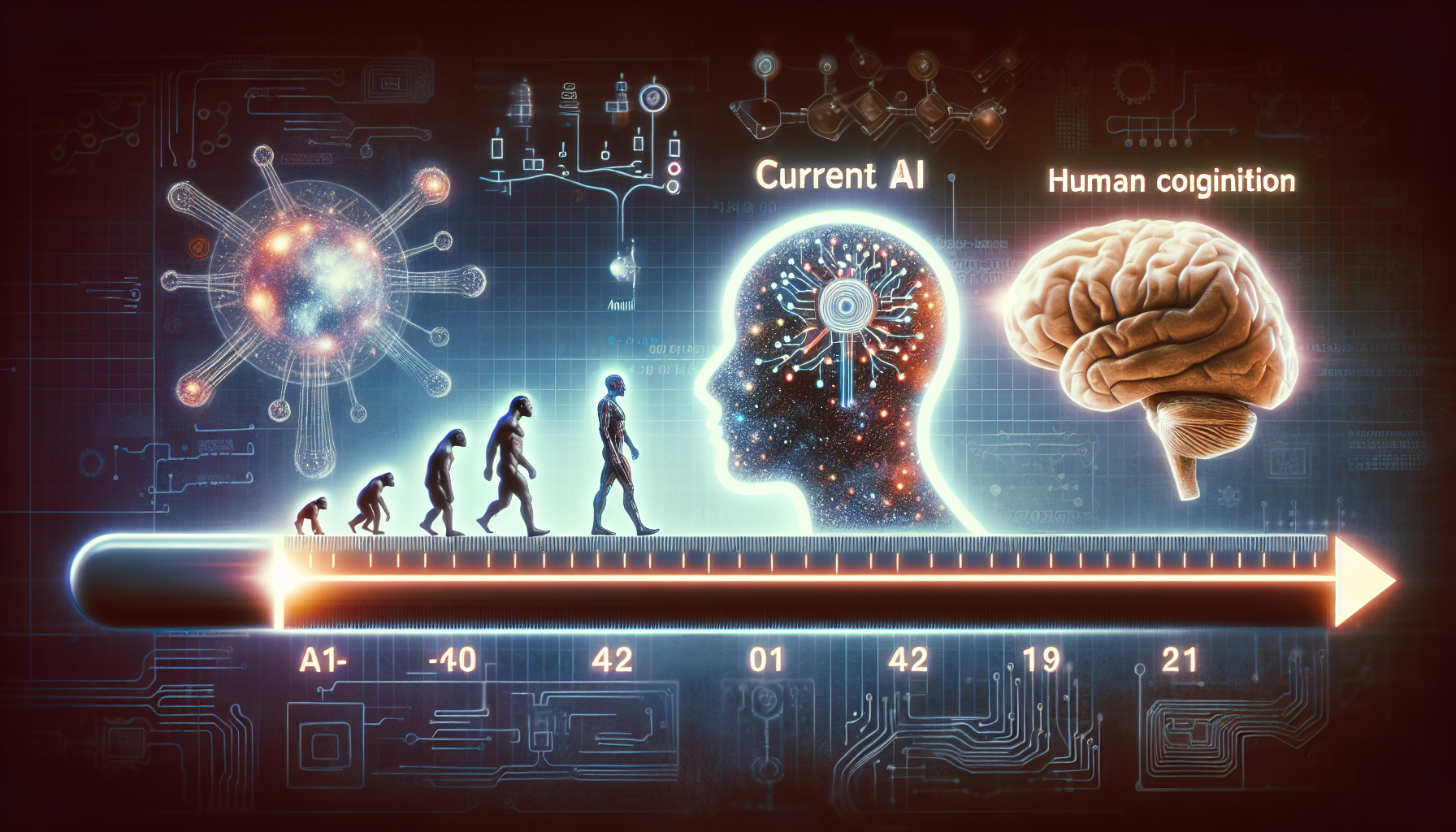

How Near Are We to Creating AI with Human-Like Cognition?
How Near Are We to Creating AI with Human-Like Cognition?
Artificial Intelligence has made remarkable strides recently, transforming from basic chatbots to advanced systems capable of composing music and crafting art. Nonetheless, a question persists among scientists, technologists, and the general public: Can AI genuinely think like a human?
What Does “Thinking Like a Human” Entail?
Human cognition goes beyond simple data processing; it includes reasoning, creativity, emotional awareness, and learning from one’s experiences. For AI to think like a human, it would need to excel in:
While today’s AI performs superbly in pattern recognition and forecasting, achieving actual human-like cognition necessitates self-awareness, common sense, and adaptable reasoning.
How Today’s AI Measures Up
Contemporary AI, especially Large Language Models (LLMs) such as ChatGPT or GPT-5, can replicate human dialogue with impressive accuracy. They are capable of:
However, these models do not genuinely “comprehend” their actions; they forecast responses based on extensive datasets—this is statistical reasoning, not conscious thought. Autonomous robots can learn from experience but are still limited to specific tasks. A soccer-playing robot cannot abruptly switch to cooking or tackling ethical dilemmas.
The Greatest Obstacles
Emotions and Ethics: Human decisions are swayed by empathy, fear, joy, and morals. AI can replicate these emotions but cannot truly experience them.
Autonomous Creativity: Though AI can create art or music, it lacks the intention and understanding that signify genuine creativity.
Self-Awareness: Presently, no AI exhibits consciousness. Machines lack beliefs, desires, or self-awareness.
Are We Progressing?
Indeed, though at a slow pace. New technologies such as neurosymbolic AI, memory-enhanced models, and self-improving agents are closing the gap between narrow intelligence and human-like cognition. While achieving human-level AI may take decades, AI that mimics human-like reasoning, planning, and problem-solving is already in existence and advancing quickly.
Why This Matters
The inquiry into whether AI can think like humans carries significant real-world ramifications:
As AI approaches human-like cognition, these inquiries grow ever more pressing.
Conclusion
AI is evolving swiftly, but authentic human-like thinking remains a far-off goal. Presently, AI can imitate cognitive tasks, forecast patterns, and even astonish us with creative outputs, yet it does not “think” in the human manner. The journey toward AI capable of human-like thought is both thrilling and challenging, transforming our relationship with technology and society.
What are your thoughts—will AI ever genuinely think like humans, or is consciousness a uniquely human trait? Share your views in the comments below!
Q&A Session
Q1: What characterizes human-like thinking in AI?
Human-like thinking encompasses contextual understanding, reasoning, learning from mistakes, creativity, and emotional intelligence—attributes that current AI has not fully attained.
Q2: How do existing AI models like ChatGPT operate?
These models excel in imitating human conversation by predicting reactions from extensive datasets, a process referred to as statistical reasoning.
Q3: What key challenges does AI encounter in attaining human-like thinking?
Among the main hurdles are common sense reasoning, emotional intelligence, autonomous creativity, and self-awareness.
Q4: Are there technologies advancing toward human-like AI?
Yes, technologies such as neurosymbolic AI and memory-augmented models are coming forth to provide AI with more adaptable reasoning and memory.
Q5: Why does the question of AI thinking like humans hold significance?
It raises ethical, employment, and safety issues, impacting how we might allocate rights to machines, coexist with them in the workforce, and ensure they make moral choices.
Related Posts
Samsung Extends Its Self-Repair Scheme to Cover 50 Devices, Including Foldables
In India, half of Apple’s smartphone shipments now consist of the iPhone 15.
Samsung is taking on Oura with the introduction of the Galaxy Ring.
About The Author
Andy Chen