Apple 03
Supporters Assert Platforms Aid DHS in Silencing ICE Opponents
The Struggle for Free Expression: How Interactions Between Platforms and Government Influence Online Dialogue In today's digital landscape, the convergence...
- Published
- Updated
3 minute read
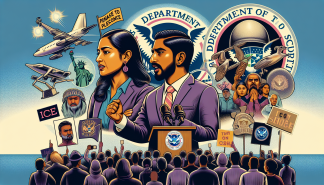
The Struggle for Free Expression: How Interactions Between Platforms and Government Influence Online Dialogue
In today’s digital landscape, the convergence of technological platforms and governmental bodies has turned into a contentious arena for free expression. Recent allegations have emerged suggesting that platforms might be aiding the Department of Homeland Security (DHS) in silencing detractors of Immigration and Customs Enforcement (ICE). This article explores the intricate nature of these interactions, the platforms’ roles, and the ramifications for free speech.
The Function of Technology Platforms
Technology platforms are central to the discourse on free expression. They act as the main channel for public conversation, making their function in content moderation vital. However, platforms face criticism for being pressured by governmental bodies to silence specific voices, especially those critical of ICE.
Are Platforms Victims or Partners?
As stated by the Electronic Frontier Foundation (EFF), platforms often find themselves in a precarious situation. They may feel obligated to follow government requests due to implicit threats, as highlighted by FIRE senior attorney Colin McDonnell. This compliance can lead to the curtailing of speech, raising alarms about the platforms’ independence and their responsibility to uphold user rights.
Legal Challenges and Government Influence
The EFF has initiated legal proceedings to reveal governmental requests, contending that the nature of communications between platforms and the government is vital to determining whether these interactions represent unconstitutional coercion. The sluggish progression of Freedom of Information Act (FOIA) lawsuits is concerning, as it hinders timely responses to potential violations of free speech.
The Consequences of Legal Action
Legal challenges have demonstrated that governmental pressure may not withstand examination. EFF Senior Staff Attorney Mario Trujillo pointed out cases where the government retracted demands to identify Facebook users once legal actions were underway, indicating that platforms possess the ability to resist when they opt to confront these issues.
Platforms as Champions of Free Expression
Platforms have the capacity to serve as champions of free expression by necessitating that government officials secure court orders before fulfilling requests to eliminate content. This proactive approach could empower users and assure that platforms do not merely serve as instruments for governmental censorship.
Promoting User Empowerment
By equipping users with tools to contest government requests, platforms can cultivate a more transparent and robust online atmosphere. This strategy not only safeguards individual rights but also reaffirms the platforms’ dedication to free expression.
Conclusion
The connection between technological platforms and governmental entities is multifaceted and laden with obstacles. While platforms may perceive pressure to acquiesce to governmental demands, they also have the chance to advocate for free expression by resisting unconstitutional coercion. As legal disputes persist, the platforms’ roles in protecting online dialogue remain a vital concern.
Q&A
Q1: What is the primary issue regarding platforms and government interactions?
A1: The primary issue is that platforms might be pressured by governmental entities to stifle speech, especially criticism of ICE, which brings forth questions of free expression and platform independence.
Q2: How can platforms withstand government pressure?
A2: Platforms can withstand pressure by demanding court orders for content removal requests and by offering users options to appeal such requests, thus operating as defenders of free expression.
Q3: What role does the EFF play in this matter?
A3: The EFF is actively engaged in legal actions to unveil government demands and champion transparency and user rights amid possible governmental coercion.
Q4: Why are FOIA lawsuits crucial in this scenario?
A4: FOIA lawsuits are crucial because they aim to disclose the nature of communications between platforms and the government, which is essential for assessing whether there is unconstitutional coercion.
Q5: How has the government reacted to legal challenges?
A5: In certain instances, the government has rescinded requests to identify users once litigation commenced, suggesting that governmental pressure may not endure under legal examination.