
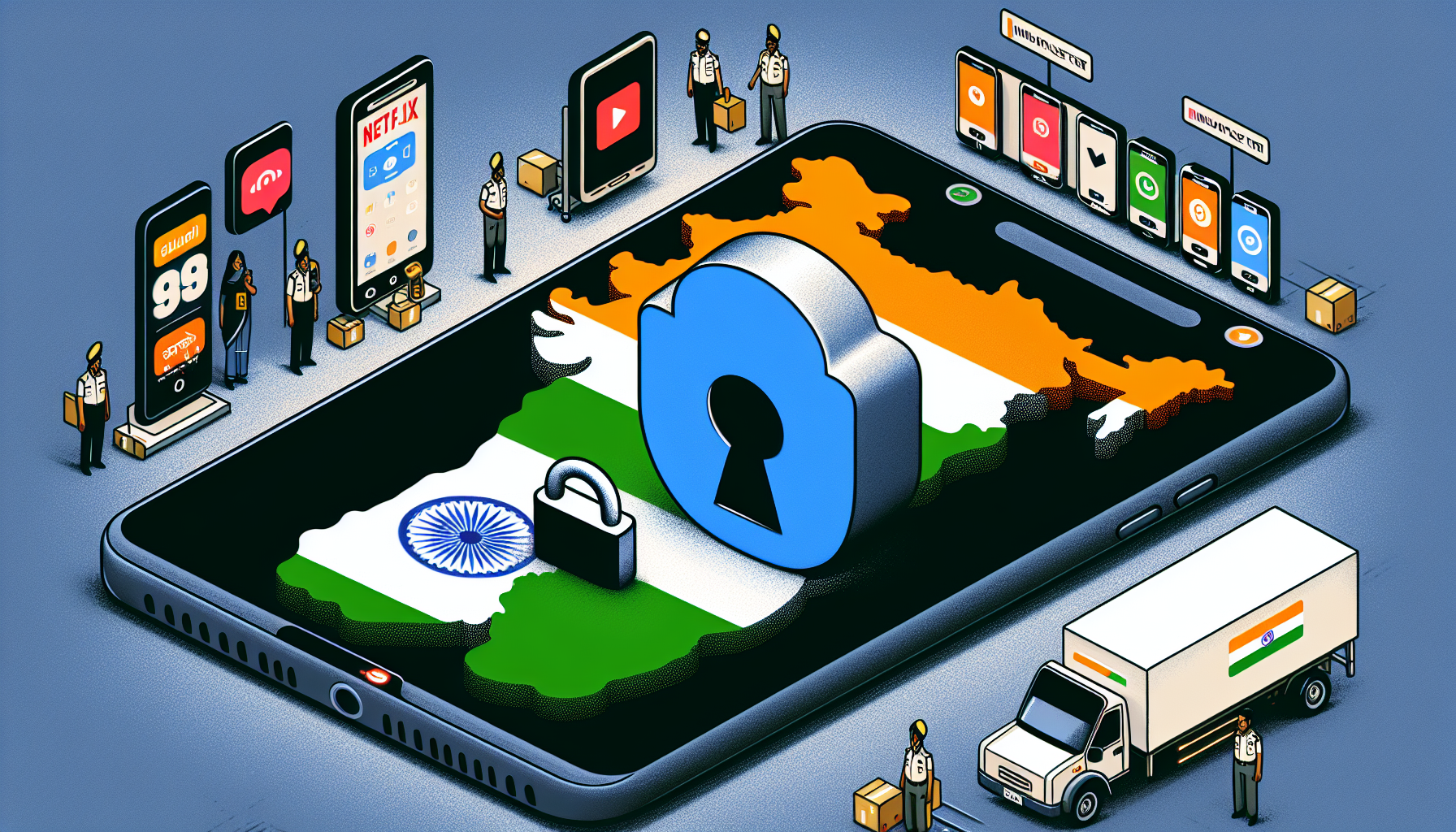
India Requires Government Security App on Smartphones: A Privacy Quandary
In an impactful decision that has ignited a vigorous debate regarding privacy and security, the Indian government has made it compulsory for all smartphones sold within the country to include a government-operated security app. This resolution has prompted apprehensions among advocates of privacy and political representatives, underscoring the fragile equilibrium between cybersecurity and personal privacy rights.
The Sanchar Saathi App: A Paradox?
The government has rolled out the Sanchar Saathi app as a measure to thwart fraud and improve security. Users can access the app or its online portal to check the number of mobile connections registered to their name and report any fraudulent incidents. Nonetheless, this initiative has been surrounded by controversy.
Privacy Issues and Political Resistance
Priyanka Gandhi from the Congress Party has strongly opposed this move, branding Sanchar Saathi as a “spying app.” She mentions that although the app aims to streamline fraud reporting, it concurrently risks government intrusion into citizens’ private matters. Gandhi stresses the importance of establishing strong systems to tackle fraud without jeopardizing individual privacy.
Technical Considerations: Root Level Access
A major point of disagreement is the extent of access the Sanchar Saathi app necessitates. While users can remove the app’s store version, the government mandate requires phone manufacturers to make sure its features remain “enabled or unrestricted.” This stipulation implies that the pre-installed version could demand deeper integration, potentially needing system-level or root-level access.
Worries from Digital Rights Activists
The Internet Freedom Foundation, an Indian organization advocating for digital rights, has raised alarms that the mandate effectively converts every smartphone into a platform for state-imposed software. The organization cautions that the app’s architecture could undermine safeguards that prevent one application from accessing the data of others, rendering Sanchar Saathi a constant, non-consensual entity on devices.
Prospects for Increased Surveillance
Critics contend that although the app is initially presented as an IMEI checker, future updates might broaden its functionalities. Concerns exist that the app could be restructured to carry out client-side scanning for prohibited applications, flagging VPN usage, correlating SIM activity, or sifting through SMS logs under the pretense of fraud detection. The absence of restrictions in the government order exacerbates these anxieties.
Conclusion
The rollout of the Sanchar Saathi app highlights the persistent struggle between boosting security and safeguarding privacy. While the app aims to shield consumers from fraud, its potential for misuse and the level of access it requires have led to substantial privacy concerns. As the discourse progresses, it remains vital for the government to transparently address these matters and ensure that cybersecurity protocols do not compromise individual rights.
Q&A Session
Q1: What is the function of the Sanchar Saathi app?
A1: The Sanchar Saathi app is intended to assist consumers in verifying mobile connections registered under their name and reporting fraudulent activities.
Q2: Why are privacy issues associated with the app?
A2: Privacy issues stem from the app’s possible requirement for root-level access, which could enable it to access and observe personal data on smartphones.
Q3: Are users able to delete the Sanchar Saathi app?
A3: Although the app store version can be uninstalled, the pre-installed version may have characteristics that cannot be turned off, raising worries about its permanence on devices.
Q4: What are the potential dangers of the app’s extended capabilities?
A4: Critics fear that forthcoming updates could allow the app to engage in surveillance tasks, such as searching for prohibited applications or examining SMS logs.
Q5: How have political figures responded to the app’s requirement?
A5: Political figures such as Priyanka Gandhi have condemned the app as a prospective instrument for government surveillance, advocating for a balance between fraud prevention and privacy rights.
