Reviews 03
Curiosity Rover’s Drill Jammed, Arctic Ocean Floor Recordings, and Additional Scientific News
Honoring David Attenborough's Influence A New Creature Named After Him Adored nature enthusiast David Attenborough marked his 100th birthday this week, and...
- Published
3 minute read
Honoring David Attenborough’s Influence
A New Creature Named After Him
Adored nature enthusiast David Attenborough marked his 100th birthday this week, and as a heartfelt tribute, a newly identified species of wasp from Chile has been named in his honor: Attenboroughnculus tau. This is not the first instance of Attenborough’s legacy being recognized in the natural realm; more than 50 species feature his name, illustrating his significant impact on nature and science communication.
NASA’s Curiosity Rover Confronts Obstacles on Mars
The Determined Martian Stone
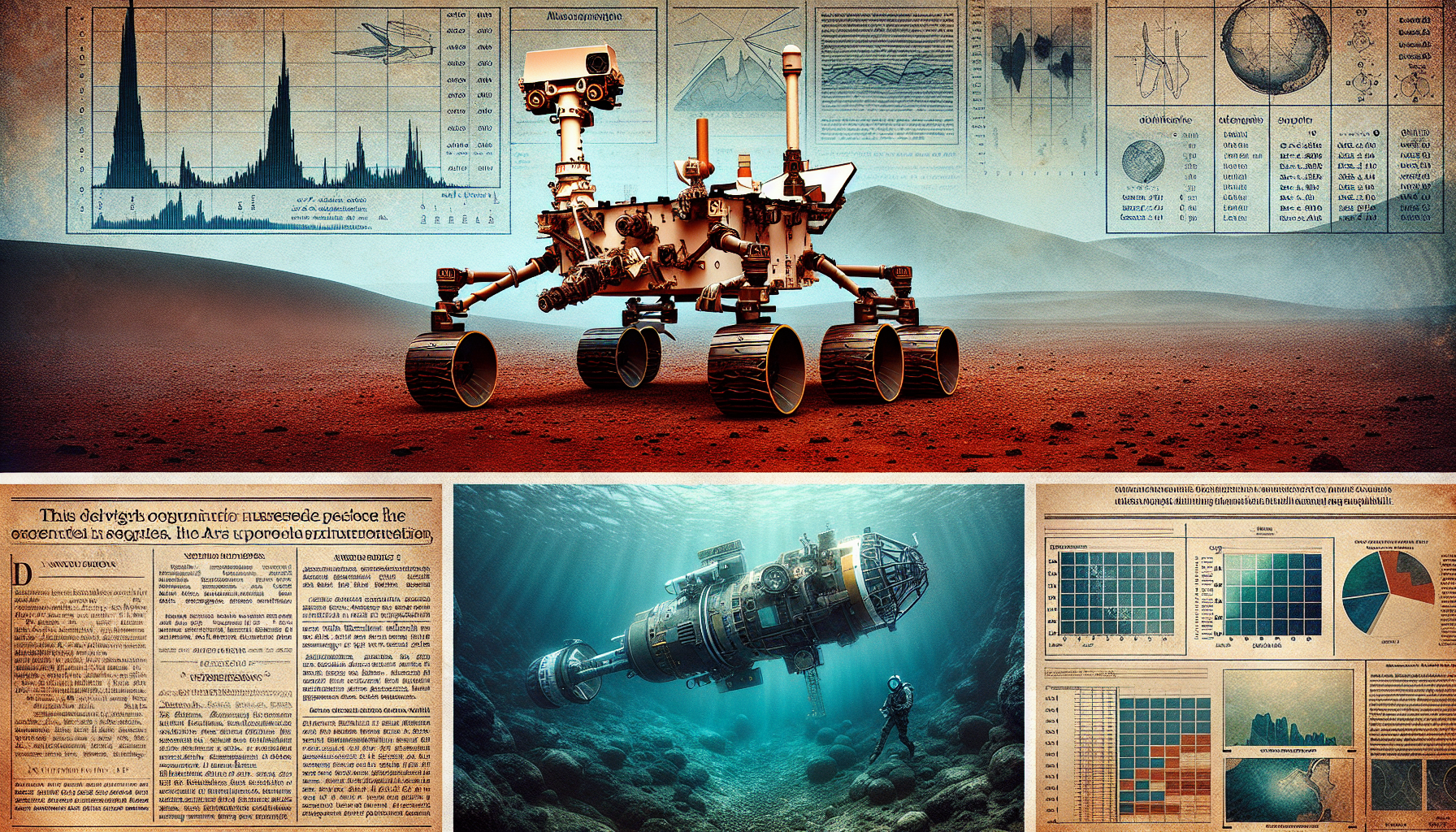
Recently, NASA’s Curiosity rover faced a distinct obstacle on Mars. While trying to gather a sample, a rock slab, designated Atacama, got lodged on its drill bit. Weighing close to 30 pounds, the rock adhered to the rover’s drill sleeve, marking a first in Curiosity’s 14-year journey. Following numerous attempts involving tilting, rotating, and vibrating the drill, the team successfully freed the rock, permitting Curiosity to continue its scientific tasks.
Ongoing Exploration and Evaluation
Curiosity’s mission entails drilling into Martian rocks to gather samples, which are subsequently examined with its Sample Analysis at Mars (SAM) and Chemistry & Mineralogy (CheMin) instruments. These evaluations aid scientists in deciphering Mars’s composition, supplying essential data to enhance our understanding of the Red Planet.
Findings in the Arctic Fjord
Subaqueous Observations in Greenland
An extended research initiative at Inglefield Bredning in northwest Greenland has afforded a rare view into the Arctic seabed. Researchers deployed a video camera and hydrophone 260 meters below the fjord’s surface, capturing images of 478 various organisms, including comb jellies, arrowworms, snailfish, and shrimp. This research, published in PLOS One, provides insights into the biodiversity and ecological conditions of this isolated area.
Sounds and Visuals from the Abyss
The equipment also picked up sounds of narwhals, icebergs cracking, and boat engines. The footage showcased “marine snow,” organic detritus that nourishes numerous deep-sea life forms. The success of this research indicates that similar techniques might be employed to investigate other Arctic ecosystems, addressing significant knowledge deficiencies.
A Visual Spectacle from NASA’s Artemis II Mission
Thousands of Images Made Public
NASA has unveiled over 12,000 images from the recent Artemis II mission around the moon. These pictures, accessible on NASA’s website, feature breathtaking views of the moon, Earth, and the Milky Way. Despite a challenging user interface, the collection presents a spectacular depiction of space exploration.
Summary
This week has brimming with thrilling advancements in science and exploration. From paying homage to a legendary nature communicator to tackling challenges on Mars and revealing the secrets of the Arctic seabed, these narratives underscore the relentless pursuit of knowledge and discovery.
Q&A Section
What is Attenboroughnculus tau?
Attenboroughnculus tau is a newly identified species of wasp from Chile named to honor David Attenborough.
How did NASA’s Curiosity rover fix the rock problem?
The Curiosity team fixed the problem by tilting, rotating, and vibrating the drill until the rock was freed from the drill sleeve.
What organisms were noted in the Arctic fjord research?
The study documented 478 different organisms, such as comb jellies, arrowworms, snailfish, and shrimp.
What is “marine snow”?
Marine snow refers to organic debris, including waste and remnants from deceased animals and plants, that descends from higher waters and supports numerous deep-sea organisms.
How many images did NASA publish from the Artemis II mission?
NASA published over 12,000 images from the Artemis II mission, featuring visuals of the moon, Earth, and the Milky Way.