
NASA’s Perseverance Rover: A New Phase of AI-Enhanced Exploration
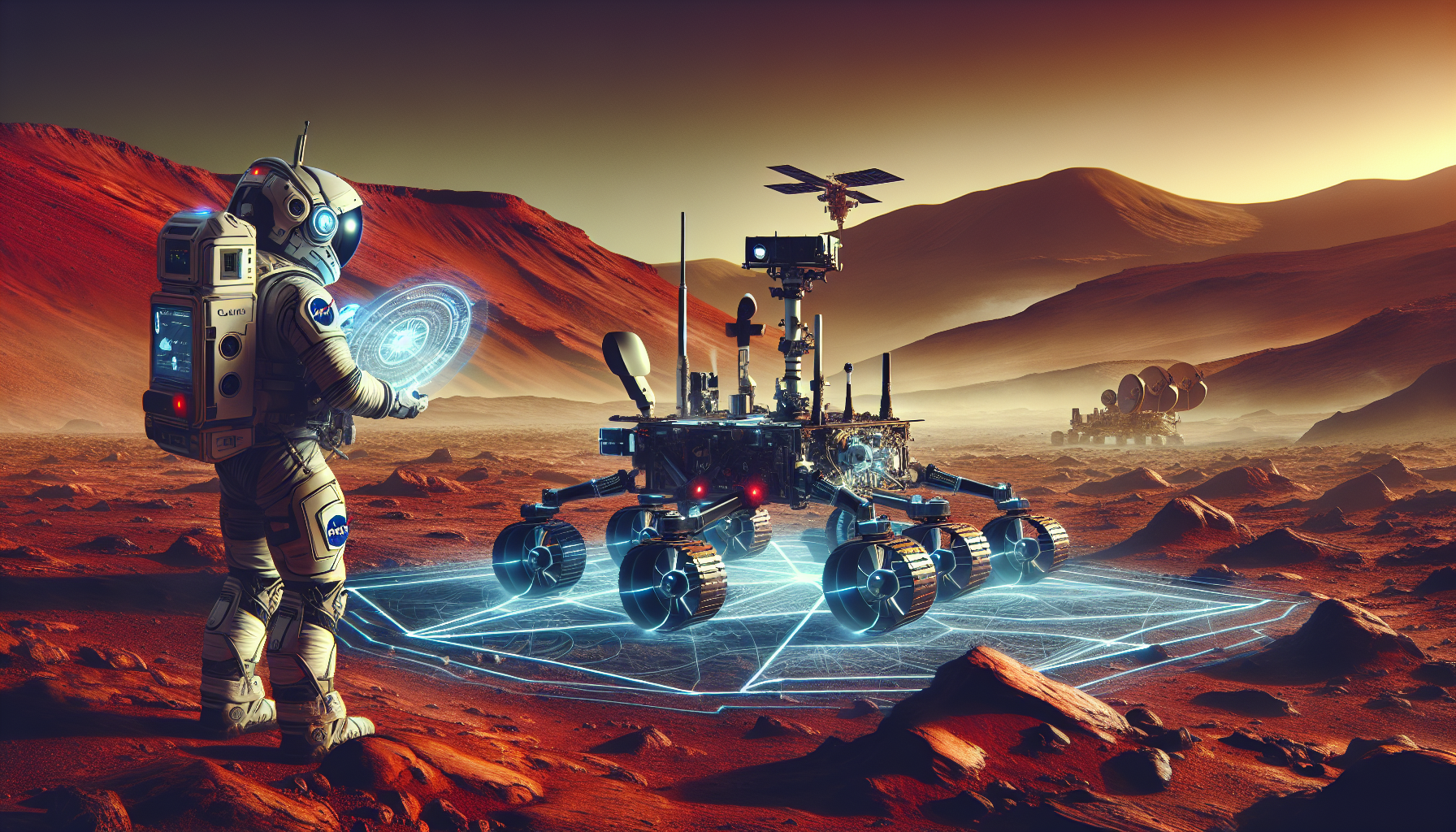
NASA’s Perseverance rover, which set down on Mars in 2021, continues to pioneer advancements in space exploration. Recently, it accomplished a remarkable feat by adeptly traversing a path in the Jezero crater with assistance from Anthropic’s Claude chatbot. This event represents the first instance of NASA employing a large language model to steer the rover, highlighting the possibilities of AI in space exploration.
The Function of AI in Mars Exploration
How AI is Revolutionizing Space Missions
The implementation of AI in space missions is not merely a future vision but a current truth. The recent expedition of the Perseverance rover, charted by Anthropic’s Claude, illustrates the real-world applications of AI in executing intricate tasks such as navigation on Mars. This progress is particularly vital given the difficulties of remote operations and the necessity for accurate maneuvering in the harsh Martian landscape.
The Difficulties of Navigating Mars
Navigating Mars is a complex challenge. The Martian landscape is erratic, with hazards such as boulders and uneven terrain. Historically, NASA’s human operators carefully devise the rover’s route, establishing a “breadcrumb trail” of waypoints based on images from space and the rover’s onboard cameras. This procedure is labor-intensive and demands meticulous planning to prevent errors.
The Claude Chatbot: A Breakthrough for NASA
How Claude Mapped Perseverance’s Route
To enable Claude to chart a course for Perseverance, NASA supplied the AI with comprehensive contextual information from the rover. Claude systematically generated waypoints, iterating in ten-meter increments. Engineers at NASA’s Jet Propulsion Laboratory (JPL) validated Claude’s work through simulations, confirming the precision of the commands transmitted to the rover. Only minor modifications were required, underscoring the efficacy of Claude’s planning.
The Influence of AI on Productivity
Employing AI like Claude markedly shortens route-planning durations, empowering NASA to undertake more journeys and collect additional scientific data. This productivity is essential, especially given the recent workforce cuts at NASA. The capacity to accomplish more tasks with fewer resources is a significant advantage for the organization as it navigates financial and staffing challenges.
The Future of AI in Space Exploration
Potential for Self-Sufficient AI Systems
Claude’s success in directing a rover on Mars paves the way for more self-sufficient AI systems in space exploration. NASA foresees AI playing a pivotal role in investigating distant regions of the solar system, where human involvement is constrained. This partnership between NASA and Anthropic establishes a precedent for future missions, potentially transforming how we conduct space exploration.
Anthropic’s Notable Achievement
For Anthropic, this partnership with NASA signifies a monumental accomplishment. The swift progression of their AI models, evolving from difficulty with basic tasks to adeptly directing a rover on Mars, illustrates the promise of AI technology. This collaboration emphasizes the rising significance of AI in scientific and exploratory efforts.
Conclusion
NASA’s engagement of Anthropic’s Claude chatbot to steer the Perseverance rover marks a defining moment in space exploration. The integration of AI not only optimizes efficiency but also lays the groundwork for prospective autonomous missions. As NASA continues its journey into the cosmos, AI will certainly assume an increasingly essential role in tackling the challenges of space exploration.
Q&A
How does AI enhance the effectiveness of Mars missions?
AI decreases the time needed for route preparation, enabling NASA to engage in more scientific operations with the rover. This effectiveness is vital for optimizing the limited resources available for space exploration.
What obstacles does AI assist in overcoming during space exploration?
AI aids in navigating intricate terrains, handling remote operations, and minimizing the requirement for continuous human involvement, thereby proving invaluable for missions to far-off planets.
What is the importance of employing AI in the Perseverance mission?
The incorporation of AI in the Perseverance mission illustrates the feasibility of autonomous systems in space exploration, setting the stage for more advanced and efficient missions ahead.
How did NASA confirm the precision of Claude’s route planning?
NASA’s JPL engineers verified Claude’s waypoints through simulations, making minor corrections as necessary to guarantee the safe navigation of the rover on Mars.
What future roles does NASA anticipate for AI in space exploration?
NASA envisions AI playing a vital part in exploring remote areas of the solar system, where human intervention is limited, potentially transforming space exploration.
