
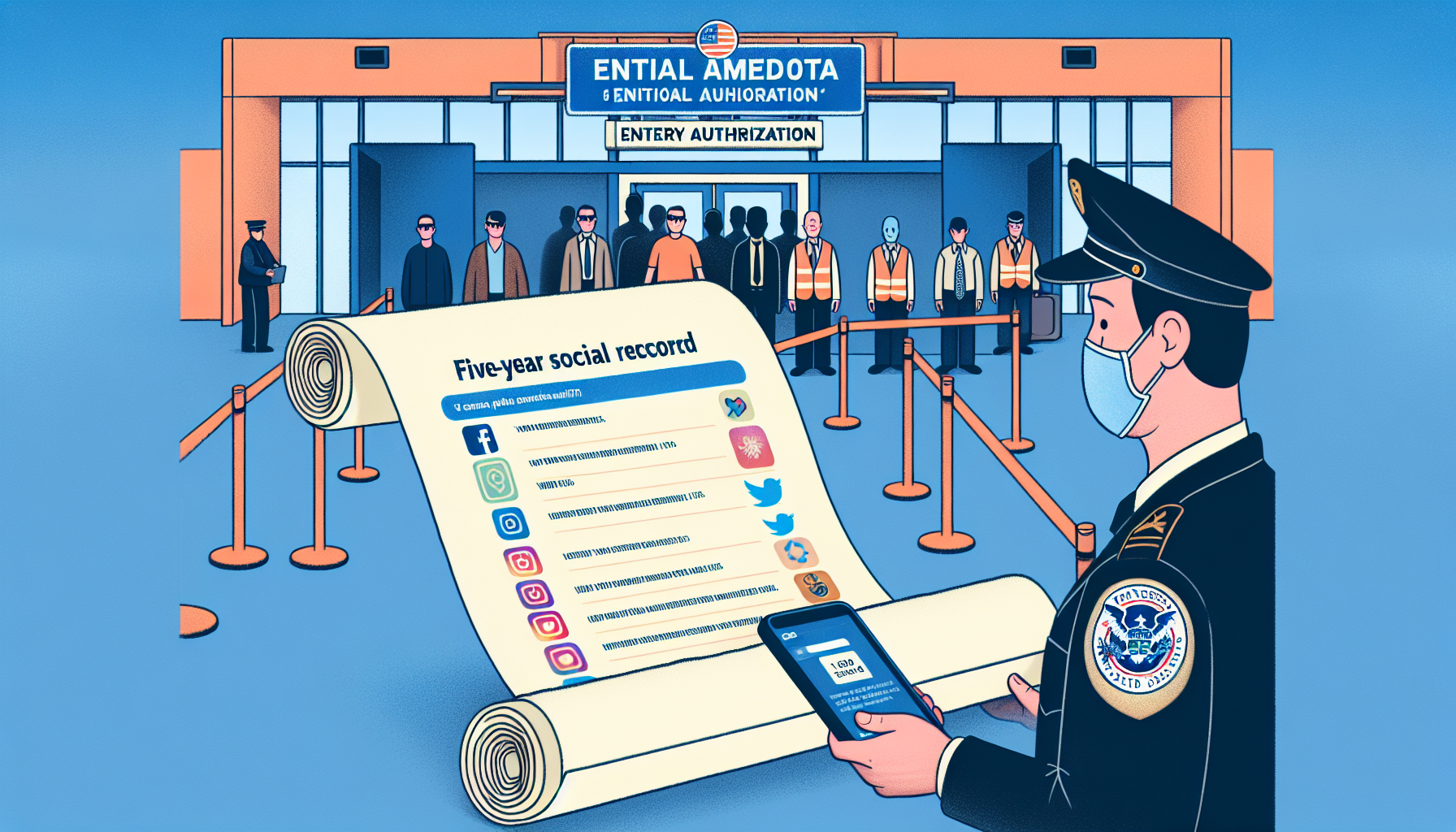
New US Travel Initiative: Social Media Scrutiny for Visitors
Grasping the Initiative
In a notable action, the US Customs and Border Protection (CBP) has put forward a new regulation that may demand tourists from Europe and other areas to present a five-year social media history prior to being permitted entry into the United States. This initiative mainly targets travelers from nations that presently enjoy relatively uncomplicated entry via the Electronic System for Travel Authorization (ESTA).
The Executive Order Underlying the Initiative
The initiative is anchored in an executive order promulgated by former President Trump, named “Protecting the United States From Foreign Terrorists and Other National Security and Public Safety Threats.” This order embodies a broader strategy aimed at fortifying US borders and mitigating illegal immigration.
What the New Regulation Entails
If enacted, the regulation would require applicants to undergo “online presence” evaluations. This includes making social media profiles public and enumerating all social media handles utilized over the past five years. Furthermore, applicants might need to furnish telephone numbers and email addresses used over the last five and ten years, respectively, along with information about family members.
Possible Consequences for ESTA
The introduction of these stipulations could substantially prolong ESTA processing times and elevate enforcement expenditures. The CBP estimates that an additional 5,598,115 man-hours annually would be necessary, translating to roughly 3,000 full-time positions. Presently, the ESTA application fee stands at $40, allowing visitors a 90-day stay and is valid for a duration of two years.
Worries and Responses
The initiative has ignited concerns among prospective travelers. Some tourists from Australia, for example, have cancelled plans to visit the US for events such as the World Cup, deeming the new regulations “terrifying.” Regardless of these worries, former President Trump conveyed no concern regarding a prospective downturn in tourism, underlining the significance of national security.
Present Condition of the Initiative
At this moment, the CBP stresses that this is solely a proposal and not yet a final regulation. A spokesperson clarified that the proposal represents the initial phase in discussing new policy approaches to safeguard American citizens.
Countries Impacted
If enacted, the regulation would affect travelers from 40 nations, including the UK, Ireland, France, Germany, Italy, Australia, and Japan. Importantly, visitors from Canada and Mexico, who account for nearly half of the total entrants to the US, are exempt as they do not necessitate a visa or ESTA authorization.
Conclusion
The proposed social media scrutiny rule for tourists underscores the ongoing efforts to bolster US border security. While it aims to protect national interests, it also raises issues regarding privacy and the possible effects on tourism. As discussions progress, the equilibrium between security and accessibility remains a crucial factor.
Q&A
Q1: What is the primary aim of the proposed regulation?
A1: The primary aim is to enhance US border security by reviewing tourists’ social media history to mitigate potential threats.
Q2: How could this proposal influence the ESTA procedure?
A2: It may extend wait times and enforcement costs, necessitating additional resources and manpower.
Q3: Which nations’ tourists would be impacted by this regulation?
A3: Tourists from 40 nations, including the UK, Ireland, France, Germany, Italy, Australia, and Japan, would be affected.
Q4: Are tourists from Canada and Mexico subject to this proposal?
A4: No, tourists from Canada and Mexico do not require a visa or ESTA approval and are not subject to this proposal.
Q5: What concerns are linked to this proposal?
A5: Concerns encompass privacy matters, potential deterring of tourists, and implications for international relations.
Q6: Is this proposal currently active?
A6: No, it remains a proposal and has not been finalized. Ongoing discussions are aimed at exploring new policy options.
